
When shoppers browse the “tech” aisle, they often wonder: Is a humidifier a tech product? The short answer is yes—modern humidifiers integrate sensors, micro-controllers, and connectivity features that place them firmly in the *** art-home category. Below, we unpack the technology inside today’s units, explain how they work, and show why SEO writers should treat them as consumer electronics.
What Makes a Humidifier “Tech” in 2024?
Traditional vaporizers simply boiled water. **Contemporary models** add:
- Ultrasonic transducers vibrating at MHz frequencies to create micro-droplets.
- MEMS humidity sensors that sample room air every few seconds.
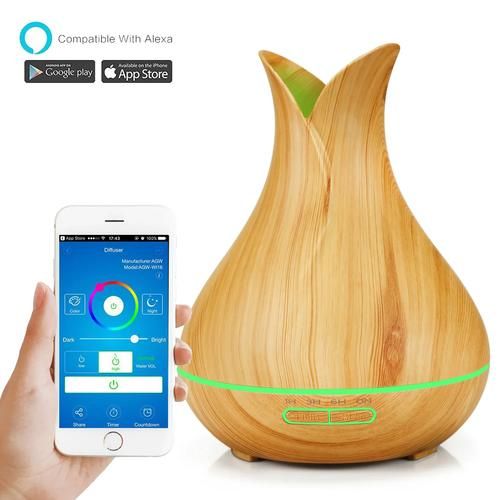
- Bluetooth/Wi-Fi radios for app control and voice-assistant integration.
- UV-C LEDs or silver-ion cartridges to kill microbes.
These components are the same building blocks found in fitness trackers and robot vacuums, so the humidifier earns its seat at the tech table.
How Do Ultrasonic Humidifiers Work?
Step-by-step:
- A **piezoelectric disc** submerged in water vibrates at 1.7 MHz.
- The vibration shears water into 1–5 µm droplets.
- A quiet **micro-fan** pushes the mist upward through a nozzle.
- A **capacitive humidity sensor** feeds data to an MCU; if RH exceeds the set-point, the MCU throttles the disc.
This closed-loop control is classic embedded-system engineering.
Evaporative vs. Ultrasonic: Which Is More High-Tech?
| Feature | Evaporative Wick | Ultrasonic |
|---|---|---|
| Sensor feedback | Optional | Standard |
| Energy use | ~25 W fan | ~12 W disc + fan |
| Mineral dust | None (filter traps) | Possible without demineralization |
| Smart-home API | Rare | HomeKit, Alexa, Google Home |
Thus, **ultrasonic models align closer to modern tech expectations**.
Smart Features That Redefine the Category
1. App-Based Sche *** ng
Using the **manufacturer’s SDK**, developers can set IFTTT rules: “If outdoor humidity drops below 30 %, raise indoor target to 45 %.”
2. Voice Control
“Alexa, set bedroom humidifier to sleep mode” triggers an API call that dims LEDs and lowers fan RPM to 900.
3. Over-the-Air Firmware
Just like a router, the MCU downloads signed binaries that patch sensor drift algorithms or add new timer presets.
Common Misconceptions Debunked
Q: Isn’t it just a fancy kettle?
A: A kettle lacks **closed-loop feedback** and **IoT radios**; a *** art humidifier is closer to a connected air-quality monitor.
Q: Do I need distilled water?
A: **Demineralization cartridges** or replaceable wicks handle tap water in most regions; the device notifies you via app when TDS climbs.
SEO Angle: Targeting Tech-Savvy Shoppers
When writing product pages, weave these **long-tail queries**:
- “best ultrasonic humidifier with HomeKit”
- “how to update firmware on Levoit OasisMist”
- “humidifier MEMS sensor accuracy review”
Google’s product-review update rewards **schema-marked specs** like dB(A) noise, CADR for moisture, and MCU model number.
Future Trends to Watch
Edge AI: On-device TinyML models will predict room occupancy and pre-humidify before you enter.
Energy harvesting: Piezo elements may recycle vibration energy to power the humidity sensor, cutting standby draw to < 0.3 W.
Matter protocol: 2025 models will ship with Thread radios for seamless multi-vendor interoperability.
Maintenance Tips for Tech Enthusiasts
- Run a **weekly citric-acid cycle**; log the cleaning date in the companion app.
- Replace the **silver-ion cartridge** every 500 hours—set a push reminder.
- Export CSV data from the app to **correlate humidity spikes with HVAC runtime**.
By treating humidifiers as the **sensor-rich IoT devices** they have become, marketers and consumers alike gain clearer expectations—and search engines reward the specificity.
评论列表