
What makes English artistic copywriting truly stand out? It’s the seamless blend of rhythm, imagery, and emotional precision that turns ordinary sentences into memorable experiences. Below, we dissect the craft step-by-step, answering the questions every writer secretly asks.
Why Does Rhythm Matter More Than Grammar?
Grammar keeps prose correct; rhythm keeps it alive. When you read a line like “The city exhaled neon,” you feel the pulse before you notice the missing article. **Short, punchy beats mimic heartbeats**, while elongated clauses mirror breathless wonder. Try reading your draft aloud—if you stumble, the rhythm is off.
How Do You Choose the Right Sensory Detail?
Ask yourself: which sense unlocks the emotion? A perfume ad might linger on **velvet iris and *** oked cedar** ( *** ell), whereas a travel brochure could spotlight **sun-warmed limestone under bare feet** (touch). The trick is to anchor one vivid sense and let the others echo.
Can Metaphors Be Too Abstract?
Only if they forget the reader’s world. Compare these two lines:
- Abstract: “Her mind was a labyrinth of infinity.”
- Grounded: “Her mind folded like a paper map, each crease a detour she hadn’t planned.”
The second still feels vast, yet we can **see the map, feel the paper**. Always tether the co *** ic to the concrete.
What Role Does Negative Space Play?
Silence is a note. In copy, white space between paragraphs or a single-line stanza acts like a rest in music. **Let the reader lean into the pause**; anticipation amplifies the next image. Apple’s “Think different.” campaign mastered this—three syllables, endless echo.
How Do You Avoid Clichés Without Sounding Forced?
Flip the expected. Instead of “quiet as a mouse,” try “quiet as a deleted message.” The brain registers the twist, rewarding you with attention. Keep a **private “swap list”**: every time you spot a cliché, jot three fresh alternatives.
Should Copy Speak to Everyone or Someone Specific?
Write to one person. Picture them: age, playlist, guilty-pleasure snack. When you address “the 29-year-old who still buys vinyl,” specificity magnetizes the right readers and politely filters the rest. **Mass appeal often means mass blandness**.
How Long Should a Sentence Be?
Like a camera lens, vary the focal length. One 25-word cinematic sweep can be followed by a 4-word dagger. Example:
She watched the storm roll in, a bruised sky cracking open above the harbor. Then—darkness.
The contrast **keeps the eye sprinting and pausing**, mimicking real thought.
What’s the Secret to an Irresistible Opening?
Start mid-action or mid-emotion. Compare:
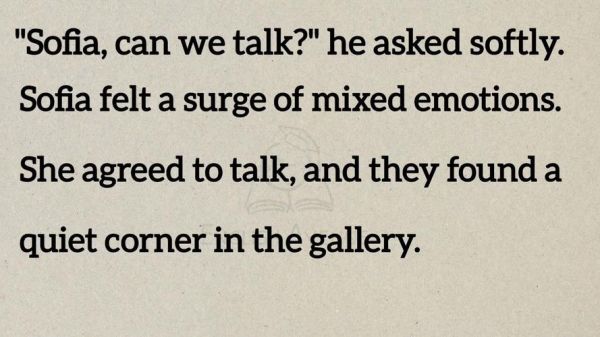
- Weak: “Our candles are made with soy wax.”
- Magnetic: “The first time she lit it, the room remembered its own name.”
The second **drops us into a story** before selling a product.
How Do You End Without Sounding Final?
End with a door ajar. Instead of “Buy now,” try “Light it, and see what the shadows confess.” The reader carries the narrative beyond the page, **haunted by possibility**.
Quick Fire Checklist Before You Hit Publish
- Read aloud—does it **sing or sag**?
- Highlight every adjective; delete half.
- Replace two abstract nouns with **tangible verbs**.
- Insert one unexpected sensory hook.
- Check that the last line **lingers longer than the first**.
Master these micro-decisions, and your English artistic copywriting won’t just stand out—it will **stand the test of memory**.
评论列表